We are now well into the 2026 Legislative Session, and the work under the Gold Dome is moving quickly. Even with winter weather trying to slow things down, the Senate stayed on track and focused on delivering results for Georgians.
Continue reading “COLUMN: Hodges: Weeks Two & Three Under the Gold Dome”Ginn: Week Two Under the Gold Dome
As the 2026 Legislative Session moves into its second week, the General Assembly is turning its full attention to its most important responsibility: passing a balanced, thoughtful budget that spends taxpayer dollars wisely.
Budget hearings began on Tuesday, January 20, when the Senate and House Appropriations Committees met jointly to hear budget requests from various departments and agencies. These hearings continued through Thursday, but the work doesn’t stop there. In the coming weeks, I’ll be serving on Appropriations Subcommittees on Agriculture and Natural Resources and Transportation. We will further discuss these recommendations and make our own suggestions. Passing a balanced budget is not only our constitutional duty as legislators, but it’s also imperative in creating a responsible government that serves its people.
One of the most impactful budget proposals this legislative session is Governor Brian Kemp’s plan to rebate more than $1 billion in income taxes, giving single filers $250 and joint filers up to $500 in additional savings. Affordability is one of our top priorities this legislative session, and providing tax relief through rebates and income tax cuts is an important first step toward strengthening our economy. These tangible policy decisions are just a further reminder that Senate Republicans’ overarching ideology of fiscal conservatism is to thank for positioning our economy as one of the best in the nation, despite reckless federal economic policy during the Biden Administration.
Gov. Kemp’s proposed budget also outlines numerous higher education investments, including those for the University System of Georgia and, more specifically, the University of Georgia. The faculty, staff and students of UGA make up a significant portion of our district (Go DAWGS!), and as an alumnus myself, I will always support investments in our state’s flagship university. Investments in our education system are often the first step to building an educated workforce and a stronger economy.
The Governor is recommending $9.5 million in formula funding for essential startup costs for the UGA School of Medicine, as well as $5.6 million for the design of a UGA School of Nursing facility. The proposal also includes over $34 million to support the ongoing modernization of Science and Ag Hill. The project promotes continued growth in STEM education and research, two fields that are growing in our workforce. Gov. Kemp has also allocated more than $31 million to food and farm operations. This is a critical industry in Northeast Georgia, and I’ll be working throughout the legislative session to secure this funding.
As the legislative session begins, I would like to invite students ages 12 to 18 to serve as Senate Pages. This highly informative program allows students to participate in the legislative process at our State Capitol for one day during the legislative session. Interested students may apply for the program by contacting my administrative assistant or me at my office via email. (Frank.Ginn@senate.ga.gov.)
Please don’t hesitate to contact my office regarding any legislative matter as we begin another productive legislative session. I hope you and your family enjoy a successful 2026!
# # # #
Sen. Frank Ginn represents the 47th Senate District which includes Madison County and portions of Barrow, Clarke, and Jackson County. He can be reached at (404) 656-4700 or by email at frank.ginn@senate.ga.gov.
For all media inquiries, please reach out to SenatePressInquiries@senate.ga.gov.
COLUMN: Walker: Week One Under the Gold Dome
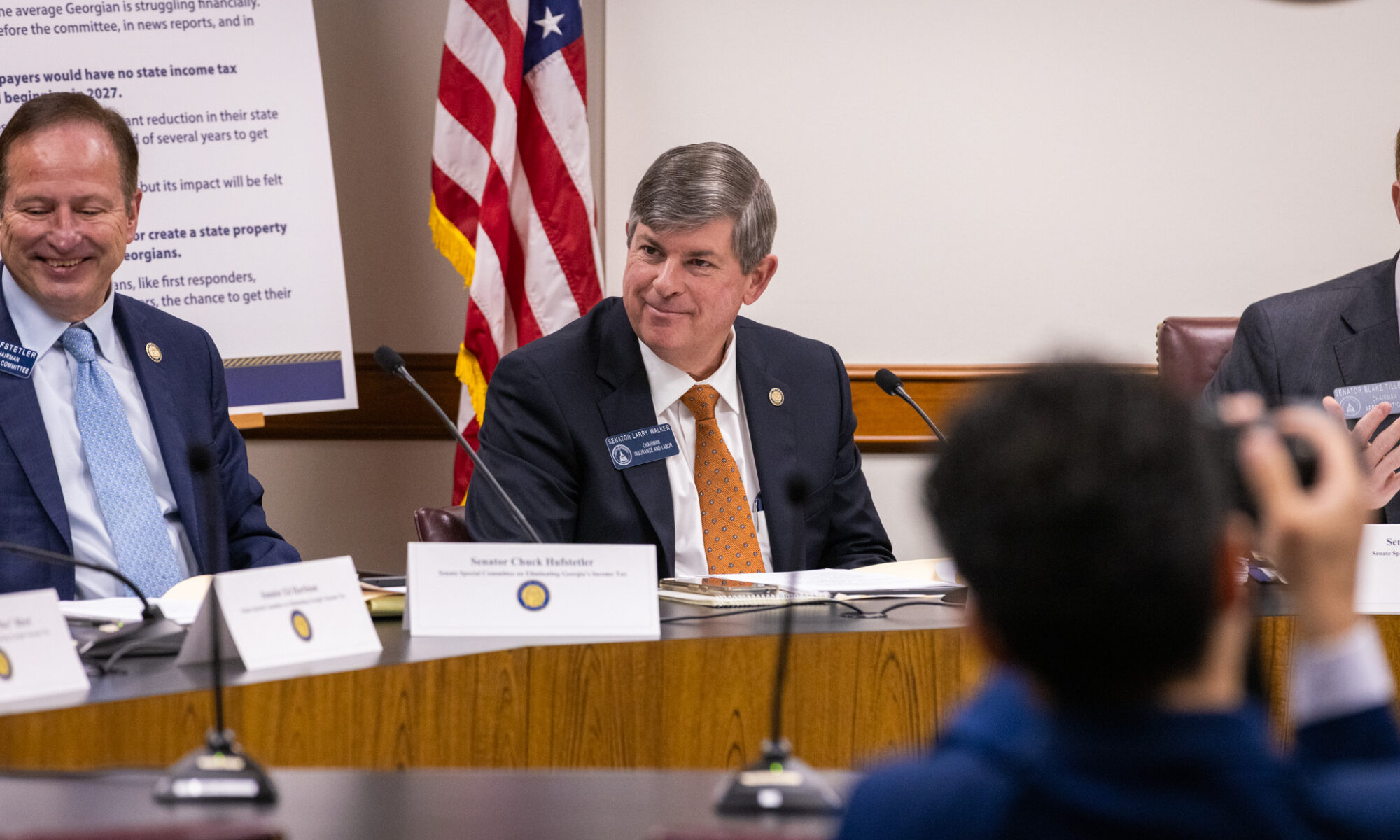
By: Sen. Larry Walker III (R–Perry)
The 2026 Legislative Session is officially underway, and after our first full week under the Gold Dome, the Georgia Senate has hit the ground running. While I remain proud to represent Middle Georgia and the 20th Senate District, this year I am also mindful of a broader responsibility to help lead the Senate in a way that serves every corner of our state.
I am deeply humbled to serve as President Pro Tempore of the Georgia Senate. The trust my colleagues have placed in me is not taken lightly. The role of Pro Tempore isn’t about titles, it’s about keeping the Senate focused and results-oriented. I’ll be continuing to work on the issues that matter most to Georgians through my service on the Senate Committees on Appropriations, Rules, Insurance and Labor, and Agriculture and Consumer Affairs. This is where the real work of governing happens.
This week, I had the opportunity to introduce our Senate Majority Caucus priorities for the session, an agenda centered on reigniting the American Dream across Georgia. That mission matters now more than ever. Families are feeling squeezed by higher prices and economic uncertainty. Senate Republicans are focused on practical solutions that help people keep more of what they earn, afford a home and build a stable future.
That starts with lowering the cost of living. We will continue working to cut income and property taxes, while advancing reforms that reduce unnecessary red tape and lower housing costs. When government lives within its means, families can do the same.
Our priorities also reflect a commitment to long-term strength. We will continue investing in public safety, infrastructure, and protecting Georgia’s natural resources, which are assets that support economic growth and quality of life in every region of the state. We’re also serious about preparing the next generation. Strong investments in education, literacy and childcare made possible by conservative financial stewardship keep our communities strong for years to come.
Governor Brian P. Kemp reinforced that vision in his final State of the State Address, outlining a responsible agenda focused on tax relief, education and workforce development. Investments to keep postsecondary institutions affordable are opening doors for students from all backgrounds, while significant investments in healthcare education and medical residencies will strengthen access to care across Georgia, including in Middle Georgia. Governor Kemp’s steady leadership has helped keep Georgia the best state in the nation to do business, and the Senate will work to build on that success.
Affordability is not an abstract policy debate; it’s whether families can pay their bills and still plan for the future. Senate Republicans understand that, and we remain committed to policies that respect hard work, reward responsibility, and keep government accountable.
It remains an honor to serve you under the Gold Dome. As President Pro Tempore, I will continue working with colleagues on both sides of the aisle to deliver results for Georgians and keep our state on a path of opportunity, stability and growth. As always, I encourage you to reach out to my office with your questions, concerns, or ideas.
# # # #
Sen. Larry Walker III serves as President Pro Tempore of the Senate. He represents the 20th Senate District, which includes Bleckley, Dodge, Dooly, Laurens, Pulaski, Treutlen and Wilcox counties, as well as a portion of Houston County. He may be reached by phone at (404) 656-0095 or by email at Larry.Walker@senate.ga.gov.
For all media inquiries, please reach out to SenatePressInquiries@senate.ga.gov.
Anavitarte: A Christmas Reflection on Georgia’s Resilience
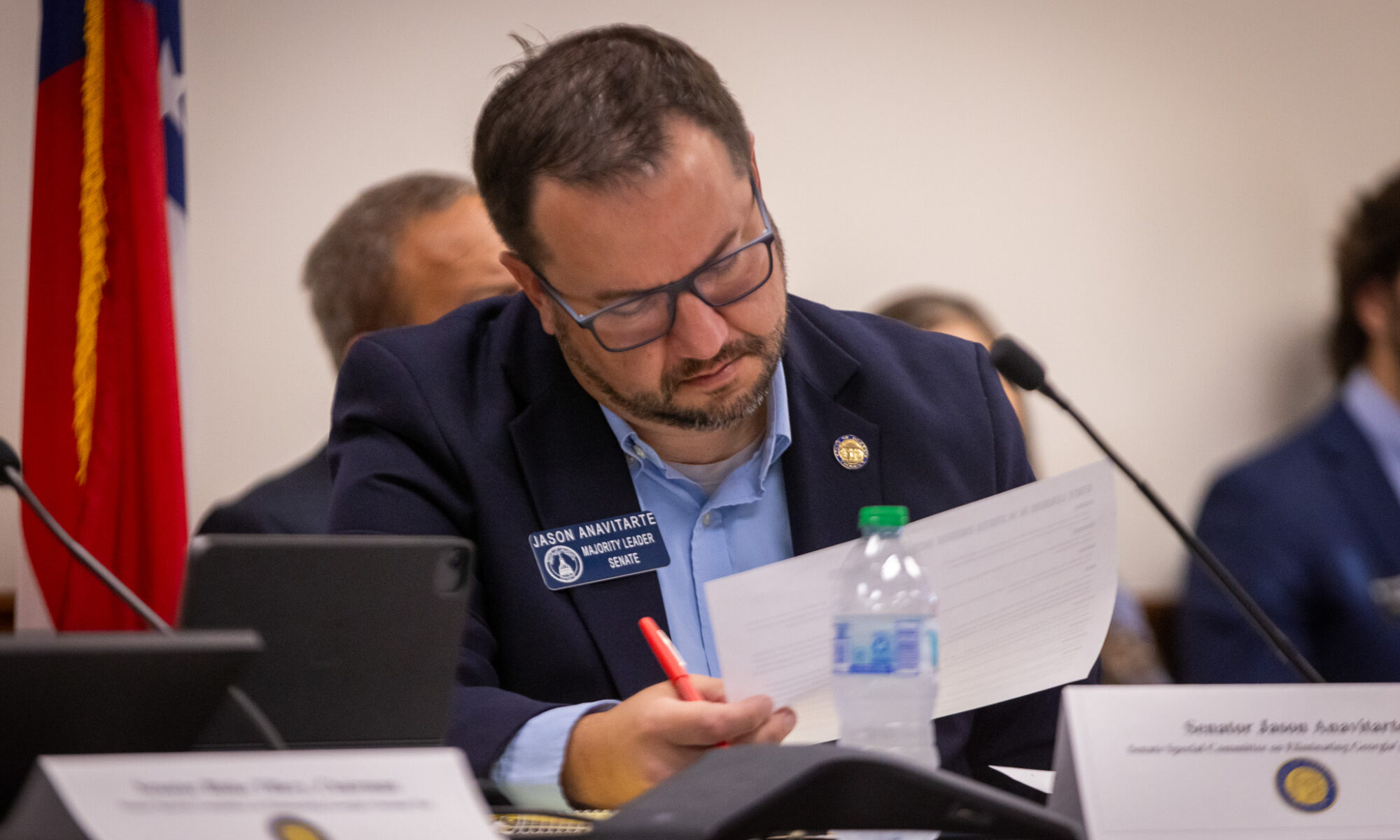
By: Majority Leader Jason Anavitarte (R–Dallas)
As Christmas approaches, Georgians across our state are arriving at the end of a long, exhausting year. Whether you live in a small town, in the mountains, along the coast, or in the city, you don’t need an economist to tell you that 2025 has tested families in ways Washington still seems unwilling to understand.
Continue readingCOLUMN: Walker: Breaking Barriers, Building Careers: Reform That Keeps Georgia Working
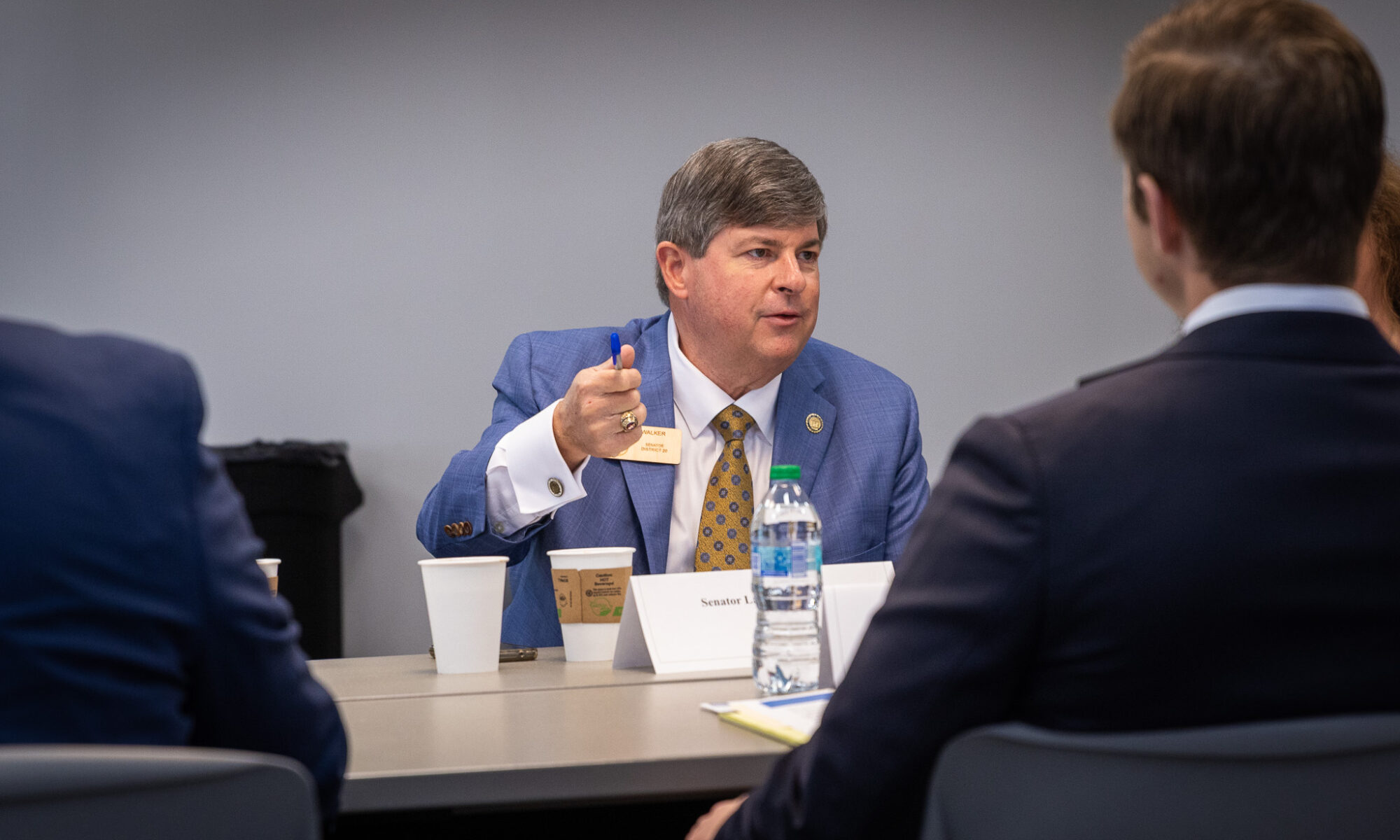
By: Sen. Larry Walker, III (R–Perry)
As 2025 draws to a close, Georgia’s economy continues to expand. Still, I keep hearing a familiar concern echoed throughout our state. A lack of work isn’t holding Georgia back; it’s the barriers that prevent willing workers from accessing it.
Across our state, we’ve got men and women who know their trades inside and out. They’ve studied, trained and earned their stripes. However, the process of becoming “official” in the eyes of the state often slows them down. Whether it’s an HVAC technician waiting on a license renewal or a small business that can’t fill a vacancy, the result is the same… good work delayed by red tape.
If someone has the training, experience and work ethic to do a job, the government shouldn’t stand in their way. According to the Georgia Department of Labor’s Workforce Trends to 2028, our state is on track to add more than 550,000 new jobs by the end of the decade, an increase of nearly 12 percent statewide. Health care and social assistance will lead the charge, adding over 122,000 positions. Professional and business services will follow closely with almost 96,000 new opportunities. Our construction industry, which propels much of our rural economic growth, is projected to grow by more than seven percent as new roads, bridges and facilities rise across the state.
Those numbers don’t tell the whole story. Every new project depends on people who are licensed and ready to work. That’s where reform matters most.
This year, I sponsored Senate Bill 125, which helps engineering graduates gain a competitive edge in their careers. Before this law, graduates were required to complete four years of work experience before they could take the Professional Engineering exam. SB 125 decouples the exam from that requirement, allowing graduates to test while the material is still fresh in their minds. They’ll still need real-world experience to become fully licensed, but they won’t lose four productive years waiting for the state’s permission to prove what they already know.
We also passed House Bill 579, which I was proud to carry through the Senate. This new law streamlines the licensing process for skilled trades and high-demand professions by giving the Professional Licensing Boards Division more flexibility to issue temporary or provisional licenses. That means a qualified plumbing apprentice or HVAC technician can begin working under supervision while completing an exam, rather than sitting on the sidelines. In places like Houston County or Laurens County, that difference can determine whether a business grows or has to turn down work.
Together, these reforms move Georgia closer to being a state that rewards hard work and eliminates unnecessary red tape, and they come at the right time. The Department of Labor projects that more than 48,000 new transportation and material-moving jobs and 14,000 new construction-related positions will be available by 2028. Add to that nearly 95,000 new jobs in science, technology, engineering and math fields, and you can see the opportunity that lies ahead.
Rural communities, especially, can’t afford to lose momentum. When a single HVAC technician or lineman retires, it doesn’t just impact a business. It affects every family, church and school that relies on their skills. Georgians aren’t asking for shortcuts. They deserve a system that respects their training, values their time and recognizes that honest work shouldn’t be tangled up in paperwork.
SB 125 and HB 579 are all about clearing the road for our people to continue to build, heal and lead in every corner of the state. As we lay a foundation for the 2026 Legislative Session, I’m committed to being a champion for every Georgian who works hard to provide for their family. When our workforce succeeds, Georgia does too.
# # # #
Sen. Larry Walker serves as Chairman of the Senate Committee on Insurance and Labor. He represents the 20th Senate District, which includes Bleckley, Dodge, Dooly, Laurens, Treutlen, Pulaski and Wilcox counties, as well as portions of Houston County. He may be reached by phone at (404) 656-0095 or by email at Larry.Walker@senate.ga.gov.
For all media inquiries, please reach out to SenatePressInquiries@senate.ga.gov.