Sen. Albers to Host Alpharetta Town Hall Meeting

ATLANTA (February 22, 2011) – Sen. John Albers (R-Roswell) will host a town hall meeting in Alpharetta on Saturday, Feb. 26, where he will deliver a presentation of legislative updates.  Attendees will then have the opportunity to participate in a question and answer session.  All residents of the 56th Senate District are invited to attend. 

WHEN: Saturday, Feb. 26, 2011
11:00 a.m. – 12:00 p.m.

WHERE: Alpharetta City Hall
2 South Main Street
Alpharetta, GA 30009

Sen. John Albers represents the 56th Senate District, which includes parts of North Fulton County.  He may be reached at 404.463.8055 or by e-mail at john.albers@senate.ga.gov.  

ADVISORY
For Immediate Release:
February 22, 2011
For Information Contact:
Natalie Strong, Director
Kallarin Richards, Deputy Director
kallarin.richards@senate.ga.gov
404.656.0028

State of the Judiciary

By Bill Hamrick

CARROLLTON (February 21, 2011) – Each year, the legislature is visited by the Chief Justice of the Georgia Supreme Court who delivers an update on Georgia’s judiciary. As an attorney and chair of the Senate Judiciary Committee, I find Chief Justice Carol Hunstein’s comments to be a fresh perspective on the future of Georgia’s judicial system.

Georgia’s prisons operate at 106 percent of prison capacity. Rather than lock up drug addicts and the mentally ill, Justice Hunstein encouraged us to more efficiently use prison space. We must prioritize prison beds for serious criminals like those who commit violent crimes and those who commit crimes against children.

It costs more than $1 billion annually to operate our prisons, probation and parole systems and Georgia has the fourth-highest incarceration rate in the nation. Chief Justice Hunstein said that one of every 13 Georgians is behind bars or on probation or parole. These are staggering figures that must be addressed. The State Bar of Georgia’s BASICS program has helped by training inmates about to be released in the skills necessary to become contributing members of society. This is an example of how we are working to reduce the recidivism rate and reserve our prisons for dangerous and violent offenders.

Hunstein outlined one of the greatest successes in the Judiciary: specialty courts. She said that if we hope to save taxpayer money while protecting the public’s safety, the criminal justice system must change the way it handles offenders with drug and alcohol addictions and mental illness. Georgia’s drug courts, DUI courts and mental health courts have become a national model. She explained that these are not “feel-good, soft-on-crime alternatives to prison.” They keep the public safer by reducing the number of repeat-offenders through treatment for non-violent offenders and strict accountability measures.

Speaking to the future, Hunstein commented on a new way of compiling lists of citizens who are eligible to serve on juries. The purpose of this change is to protect everyone’s constitutional rights to equal protection and a jury of his or her peers. Technological advances have allowed us to improve the quality of data about people eligible to serve. The new system, she explained, would use voter registration lists that may not completely represent society and vital statistics and drivers’ records that would help fill in the holes to ensure fair and impartial juries.

Justice Hunstein emphasized that the entire judicial branch receives less than 1 percent of the entire state budget but they generated more than $544 million in fees last year, and almost $90 million of that was returned to the state general fund. The legislature must continue to support the Judiciary and the important work they do. I look forward to working with Chief Justice Hunstein and the rest of the judges, attorneys and staff that make up the Judicial Branch.

Sen. Bill Hamrick serves as Chairman of the Judiciary Committee. He represents the 30th Senate District which includes portions of Carroll, Douglas, and Paulding counties.  He may be reached at 404.656.0036 or via e-mail at bill.hamrick@senate.ga.gov.

COLUMN
For Immediate Release:
February 21, 2011
For Information Contact:
Kallarin Richards, Deputy Director
Katie Wright, Communications Manager
katie.wright@senate.ga.gov
404.656.0028
Senator Tolleson Reports from the Capitol

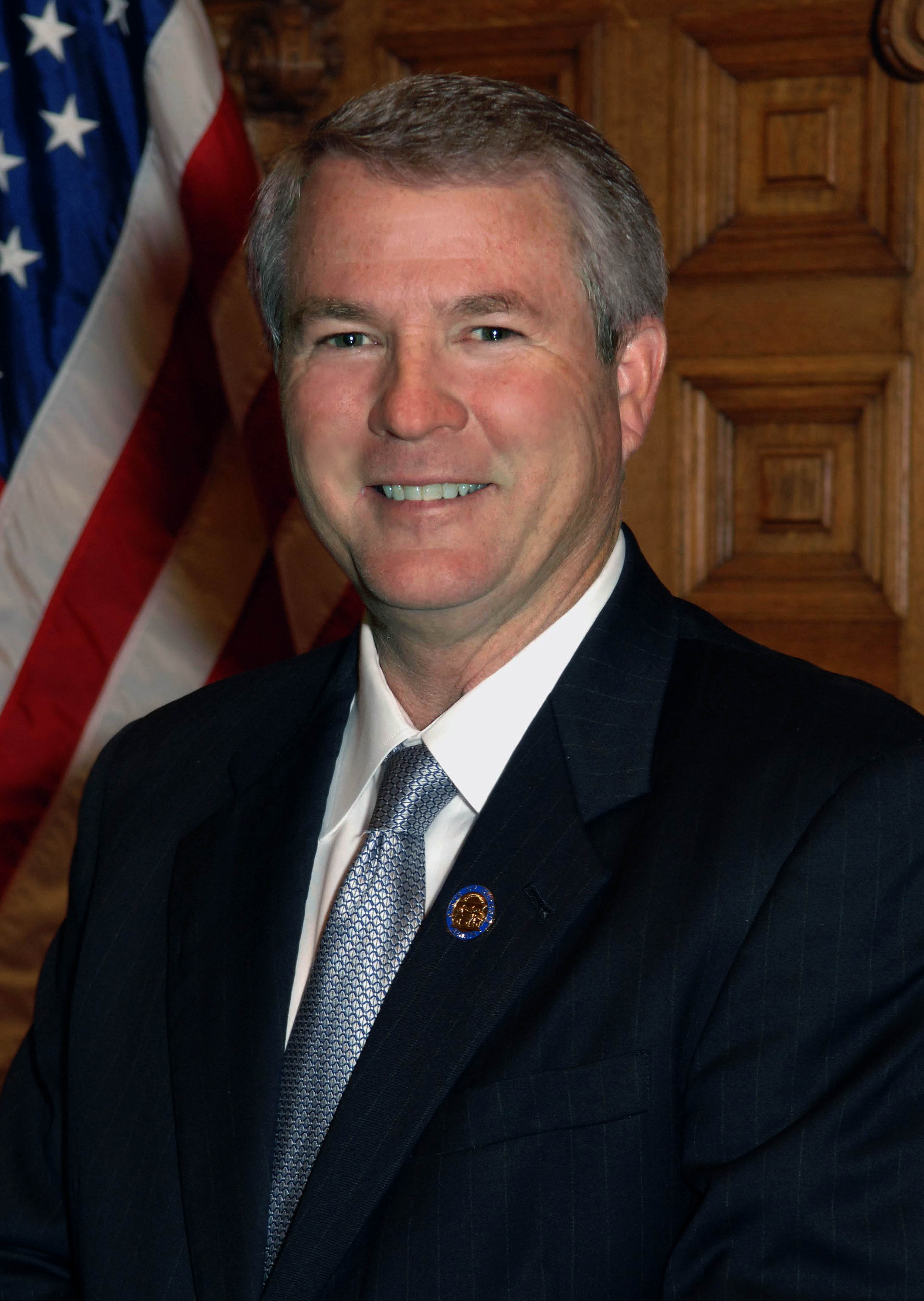
By Sen. Ross Tolleson

PERRY (February 18, 2011) – This week, I introduced legislation to help our state maintain adequate water resources.  While we continue to negotiate with our neighbors in Florida and Alabama, everything must be done at the state level to establish a framework for future water planning.

Known as the Georgia Public/Private Water Supply Act of 2011, Senate Bill 122 creates new options for financing water projects by allowing state and local governments to voluntarily partner with private investors on the construction of reservoirs and other water infrastructure projects.  This gives local governments control over their water resources and allows them to tailor future water planning to meet their individual community’s needs.  I look forward to working with my colleagues as this bill begins to move through the legislative process.

We welcomed a special visitor from Perry this week in the Senate Chamber, former Representative Larry Walker, one of the most highly respected members of the General Assembly who served in the legislature from 1972 to 2004.  He was elected House Majority Leader in 1986 and later was elected to serve on the Department of Transportation Board from 2007 to 2009, representing Georgia’s Eighth Congressional District.  A lifelong Perry resident, Rep. Walker has been a regular columnist in the Houston Home Journal for over 10 years and has recently published a book called Life on the Gnat Line, a composition of his widely read columns.  I was honored to welcome my friend and colleague back to the Capitol to recognize him for his many achievements and celebrate his most recent literary success.

Through our partnership with the Medical Association of Georgia, a physician volunteers every day at the Capitol to take care of legislators’ medical needs while they’re away from home.  The Doctor of the Day is also introduced in both the House and Senate at the beginning of the legislative day.  This week, I was proud to host Dr. Rebecca Tarlton of Laurens County as Doctor of the Day.  Dr. Tarlton earned her medical degree from the University of Western Ontario and completed her residency at Duke University.  She was the first female radiation oncologist in Georgia and has played an integral role in the development of a unique and successful technique used in the treatment of prostate cancer.

We celebrated Rural Health Day to raise awareness of the need for quality health care in the state’s rural areas.  Georgia has 109 rural counties encompassing over 2 million residents, and is experiencing a continuing decline in the availability and quality of health care services.  These geographic areas have the highest cancer and cardiovascular mortality rates and infant mortality, child abuse, and teen pregnancy rates.  The growing uninsured population and elderly population with multiple diseases far exceed the area’s health care resources.  The Georgia Rural Health Association plays an important role in working with state officials to address the health care needs of our state’s rural communities.

Also this week was the legislative appreciation luncheon for Georgia’s Career and Technical Student Organizations (CTSO) and the Georgia Association for Career and Technical Education (GACTE).  The technical student organizations provide opportunities for student leadership, competitive events and community service and work alongside GACTE to provide educational leadership in developing a competitive workforce.  One of our local students, Laurie Beth Nix who is a senior at Houston County High School, participated in the event.  A number of other local students were honored for their equestrian achievements during Equine Youth Day, including Colby Upshaw (Cadwell), Beth Langston (Elko), Colleen Wright (Adrian) and Megan Jones (Milan).

I was proud to join Governor Nathan Deal for a photo with the St. Patrick’s Festival Committee, which is working hard on Dublin’s 46th Annual St. Patrick’s Festival.  I was also honored to speak to the Leadership Dodge Program of the Eastman-Dodge County Area Chamber of Commerce.  I’d like to thank all of these distinguished Georgians for visiting us at the State Capitol this week.

As always, it is an honor to serve you in the 20th Senate District.  Please feel free to contact me with your ideas and concerns as we work together for a better State of Georgia.

Sen. Ross Tolleson serves as Chairman of the Natural Resources and the Environment Committee.  He represents the 20th Senate District, which includes Bleckley, Dodge, Johnson, Laurens, Pulaski, and Telfair counties and parts of Houston and Wilcox counties.  He may be reached at 404.656.0081 or by e-mail at ross.tolleson@senate.ga.gov.

COLUMN
For Immediate Release:
February 18, 2011
For Information Contact:
Natalie Strong, Director
Kallarin Richards, Deputy Director
kallarin.richards@senate.ga.gov
404.656.0028


Legislation to Strengthen Local Control Hits the Senate this Week

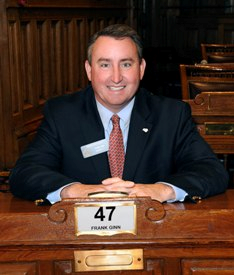
By Sen. Frank Ginn

DANIELSVILLE (February 18, 2011) – Georgia’s population growth is quickly outpacing the U.S. rate, adding more than 1.5 million residents since 2000.  It’s easy to see how government could expand to meet such rapid population growth, but growing government will not help our state recover from this recession.  There’s a significant push this year at the Capitol to return to the principles of limited government, namely by strengthening local control and removing bureaucracy.

Empowering local governments to make decisions in their best interest helps communities operate at a higher level of efficiency and cuts down on the waste of taxpayer dollars.  This week, I introduced legislation (Senate Bill 86) that aims to alleviate some of the unfunded mandates placed on local governments by the state.  Senate Bill 86 reduces some of the burden on local government by making it optional for cities and counties to develop a comprehensive plan.  Currently, these plans are required to be developed into a rigid format with little flexibility.  I want to allow local elected officials to develop and modify plans that are tailored to their community.

I’ve been working with the Association of County Commissioners of Georgia, the Georgia Municipal Association, the Department of Community Affairs, and several senators with local government experience to reduce the burden on local governments.  In turn, this will reduce the financial burden on taxpayers.  Comprehensive plans that cost tens of thousands of dollars and sit on a shelf not being used are a waste of your tax dollars.  Completing a comprehensive plan can cost communities anywhere from $30,000 to well over $100,000.  As all property owners pay county taxes and most pay city taxes, this is a cost that is saddled on the taxpayer.

By giving local governments the option to decide when and how they need to complete a comprehensive plan, they can dedicate their resources to the most important needs in their community.  This bill effectively peels away another layer of bureaucracy and gives more control to the people who know the needs of their community best.

Senate Bill 86 also addresses getting the right information to the right people at the right time.  Currently, the Development of Regional Impact (DRI) process is to have the regional commission review a significant project and render an opinion that carries no significance.  I propose that in the event of a significant project, it is much better to give notice to all local governments in the region.  Leaders and interested individuals would then work with the elected officials in the appropriate jurisdiction to inform them of consequences to the region.  This would allow information to be available and to be processed and used in the most effective way.  I strongly believe elected officials will make the best choice for their community.

Having served as both a county and city manager, I understand the strain that some of these unfunded mandates can place on local governments.  This session, I’ll continue working with my colleagues in both the Senate and House to remove the burdens and bureaucracy of government in both local and state tax dollars.  Please feel free to contact me to let me know how I can best serve you. 

Sen. Frank Ginn represents the 47th Senate District, which includes Barrow, Madison and Oglethorpe counties and portions of Clarke, Elbert and Jackson counties.  He can be reached at 404.656.4700 or by email at frank.ginn@senate.ga.gov.

COLUMN
For Immediate Release:
February 18, 2011
For Information Contact:
Natalie Strong, Director
Kallarin Richards, Deputy Director
kallarin.richards@senate.ga.gov
404.656.0028

Sen. Tolleson Offers New Mechanism to Fund Water Projects

ATLANTA (February 18, 2011) – Sen. Ross Tolleson (R-Perry) has introduced a bill that creates new options for financing water projects in communities throughout the state.  The Georgia Public/Private Water Supply Act of 2011 (Senate Bill 122) will allow state and local governments to voluntarily partner with private investors on the construction of reservoirs and other water infrastructure projects.

“As we establish a framework for how Georgia’s going to meet its future water needs, local governments must maintain control over their water resources.  This legislation aims to strengthen local control by allowing local governments to identify, propose, negotiate and award public/private water supply and water treatment projects,” said Tolleson.  “In such difficult economic times, it’s imperative that we utilize our private sector partnerships to help expand Georgia’s water supply.  The future of Georgia businesses, local governments and the state all depend on maintaining adequate water resources.”

The process outlined in the bill is similar to the public/private procurement code that has been successfully implemented at the Georgia Department of Transportation and would provide a new, viable option for financing as local governments and the state continue to face significant budget challenges.  The legislation aligns with Governor Nathan Deal’s efforts to ensure that Georgia will be able to meet its long-term water needs.

State leaders are working to ensure that any legislation regarding Georgia’s water supply meets the recommendations of the Water Contingency Task Force, a group of government, business and environmental leaders from across the state.  Early last year, the task force recommended that any future water planning focus on statewide conservation, capture and control of the state’s water supply.  As continued access to adequate water resources remains in question for future use, Tolleson’s bill could be used to accelerate access to the creation of future water supplies for needy areas of the state.

As chairman of the Senate Natural Resources Committee, Tolleson passed the most comprehensive water conservation bill in Georgia’s history last year, which outlines proactive steps in planning for water enhancement during future extreme drought conditions and additional water emergencies.

Sen. Ross Tolleson serves as Chairman of the Natural Resources and the Environment Committee.  He represents the 20th Senate District, which includes Bleckley, Dodge, Johnson, Laurens, Pulaski, and Telfair counties and parts of Houston and Wilcox counties.  He may be reached at 404.656.0081 or by e-mail at ross.tolleson@senate.ga.gov.

PRESS RELEASE
For Immediate Release:
February 18, 2011
For Information Contact:
Natalie Strong, Director
Kallarin Richards, Deputy Director
kallarin.richards@senate.ga.gov
404.656.0028